
Books & Novels
Most recent review highlighted.
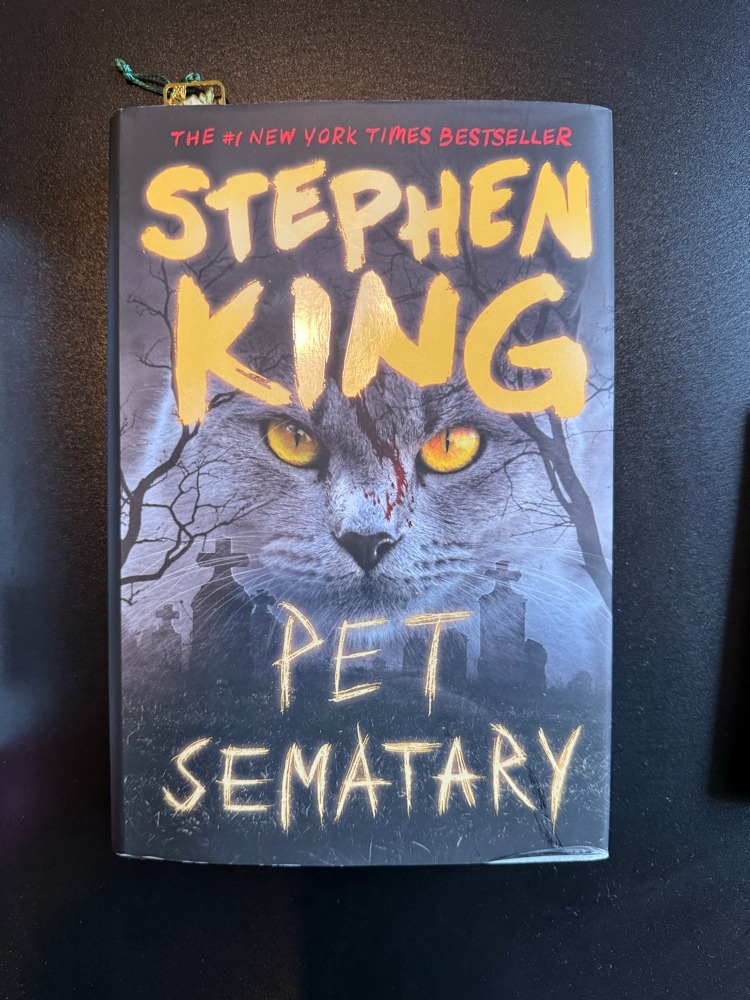
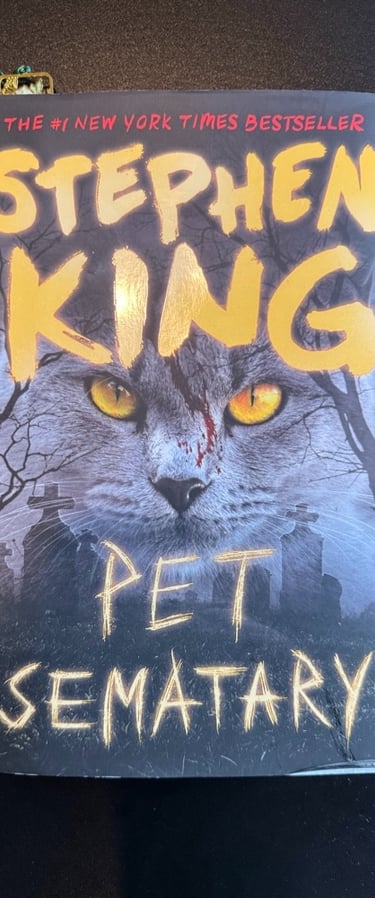
Image Credit: Book cover art for Pet Sematary by Stephen King. Courtesy of Scribner.
Yes... I took this photo myself.
Review #1: Pet Sematary
Author: Stephen King • Publication Date: November 4, 1983 • Freeman Score: 9.5/10
Dead, Alive, or Somewhere In-Between: Stephen King's Pet Sematary
The silence that follows the closing of Pet Sematary reverberates through every layer of your existence. The heavy, soul-twisting breeze of thought that pervades your being is suffocating yet freeing, releasing you from the worldly boundaries etched by surface societies. While many, like myself, may have gotten their first taste of Pet Sematary from the 1989 film adaptation or the 2019 remake (please watch the original from 89' if you have not), the King novel from 1983 is a visceral and extremely detailed goliath of a story compared to anything that a film can produce. It is Stephen King at one of his peaks and truly speaks to the power of grief, the human heart, and the internal battles we would face if we had the choice. While it may not be for everyone, especially as it delves into death and the gruesome reality King's mind conjured, it is a story worth reading and has meanings that only you can understand through your own analysis.
That said, I have to ask: What would you do if you could bring a loved one back from the dead?
[SPOILER WARNING]: The following review contains significant plot spoilers. If you have not yet experienced the Creed family’s descent into the Micmac burial grounds, proceed with caution.
Although I have not yet read ALL of King's novels, Pet Sematary stands out for a few reasons. First, his ability to place you in the center of the story as if you're watching your life on a strange and alien television that pulls you into bad decisions when your inner mind screams to stop. Second, the parallels between reality and the novel are undeniable in the connection between life and death, and how we connect the dots. Third, the boldness of the storytelling and the strength of the demons that outweigh true friendship, bonds that break under immense pressure. Truly, what makes Pet Sematary stand out in King's outstanding bibliography is the building of the home, the love, and the realism of the average middle-class family in the 1980's. We don't just read about the centralized Creed Family, we live with them.
That said, by the time Louis walks with the dead and a speeding Orinco truck slams into the two-year-old Cage Creed, spilling his being into the road, we feel all of the shock of a child dying and then some. King’s mastery lies in how he anchors the supernatural to the plain, ordinary occurrences we believe happen daily for the sake of happening. The move from Chicago to Ludlow, the choice to get the cat fixed, the choice to bring it back, the choice to work at a university, and so much more—it builds up to show you that everything does happen for a reason. We just don't always know who, or what, had their hands in it.
The Wendigo: The Hidden Hand
One of the key elements in the novel that the film glosses over is the Wendigo. In the novel, the burial ground isn't just spoiled, "sour soil"; it is influenced and embodied by an ancient, cannibalistic spirit that manifests and inhabits it. This entity is something that King weaves into everything malevolent in the story and connects to all of the things that happen to people. While it isn't exactly "Oz The Gweat and Tewwible" (I don't think), it is a force with much influence over the people it comes into contact with; a reach that seems to know no limits. After all, Cage didn't just run into the road on his own, and Jud didn't just want to tell Louis the town's dirty secret—it was an influence.
Once again, this is King at his finest: creatively informing readers that evil isn't just around us; it uses our most pure and benevolent intentions in times of grief and transition as a doorway to dark desires and outcomes.
Zelda and the Legacy of Trauma
Throughout the novel, there is the running subplot of Rachel's sister, Zelda. While many may remember this from the 1989 movie as one of the more creepy and nightmare-fueling aspects of the film (if you know, you know), it is much more disturbing in the novel; not because of the imagery, but because of its grounding in reality. The description of Zelda's spinal meningitis, her twisting back, and Rachel's subsequent relief at the family's "dirty secret" finally dying, are all relatable to the readers and add layers of complexity to the psychological depth. Even if you haven't been in a situation where you are around someone who you love, but deep in your mind feel as if they are a burden due to their illness or challenge, you can imagine the strain that something like this would apply.
King's usage of Zelda to show that the Creeds were broken from the very beginning, long before Maine, only adds to the terror and realization that the manifestation of death and evil took hold of them before they discovered the resurrection powers of Ludlow's soil. Rachel's paralyzing fear of death and anything associated with it, mixed with Louis's arrogant and false beliefs that death is natural and people should accept it as such, are two juxtaposing pieces to the key that unlocks the truth of the burial grounds deep within the woods.
The Final Descent: When Love Becomes a Scalpel
The third act is a masterclass in tension, regret, and insanity. Focusing on Louis, against his better sense and knowledge, exhuming his own two-year-old son from a moist grave, King's prose becomes frantic and claustrophobic. Truly bringing you into the mind of a grieving father who is doing what he knows is wrong, but is being told is right. The horror of seeing the small child return as a vessel for the Wendigo, engaging in a brutal outcome that is both revenge and a twisted thank you to a long-time Pet Sematary patron, is a perversion of sacred bonds, what we think is acceptable, and what we think is safe.
The ending doesn't offer catharsis, warmth, or any sense of relief that things are finally over. The truth is that they were over from the start. They were over before Cage was born, before Louis and Rachel married, and before Jud first learned of the powers in his hometown. This twisted, bitter knowledge leads to the lesson that dead is better—a lesson Louis fails to learn as he visits the burial ground one final time. Losing his sanity, soul, and family with every step he took.
The cycle, as it began with Jud and then the Creed family, must continue on.
The Verdict: Why You Should Give It A Read
Pet Sematary is more than a horror novel; it is a meditation on the limits of the human spirit in its more nude form. It makes you question love, loyalty, humanity, and spirituality as you let go of what you feel you cannot let go of. King weaves the trauma of Rachel's sister Zelda, the death and warnings of Victor Pascow, and the influence of the Wendigo into a single, tight narrative that makes this novel one of the most haunting of the 20th century. Truly a masterful expression in the genre.
Final Score: 9.5/10
Check Out My Previous Reviews!
Contact
© 2026. All rights reserved.


Content Hubs
Stay Connected
Join the Freeman Files newsletter for updates